
Reviewed · JACK THE RIPPER TOURS
Interactive Jack the Ripper Night Walk: London’s Murder Mystery
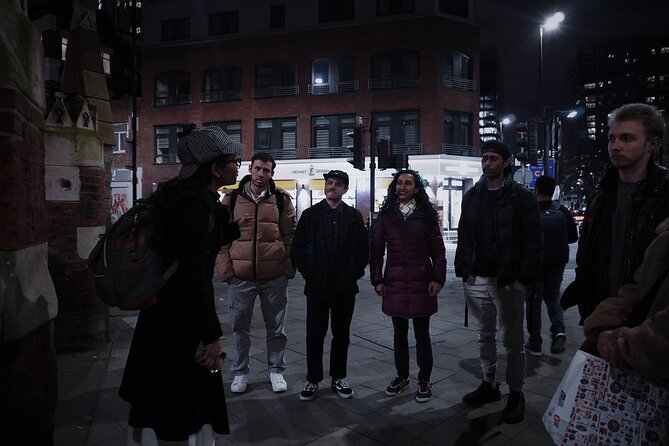
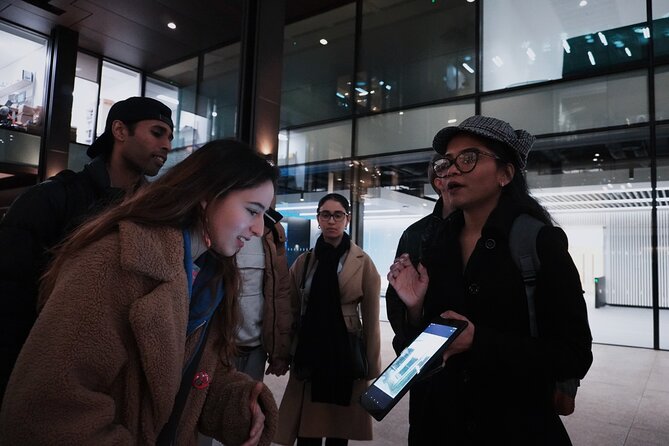
Jack the Ripper’s identity remains unknown, but Whitechapel’s streets are real. This night walk uses Brick Lane, Princelet Street, The Ten Bells, and Mitre Square to turn a famous criminal case into a story about poverty, danger, policing, and the women caught in it. You follow the route after dark, when narrow lanes and old buildings give the subject its proper mood.
I like the clear seven-stop route and the way it links crime scenes to everyday Victorian life. I also like the guide-led approach: Tyson has been praised for remembering names and handling questions, while Sadie brings an especially spirited and respectful focus to the women’s stories. The main drawback is that the tour ends at Mitre Square rather than returning to the church, and one guide has been difficult to hear in a noisy group.
Key points to know before booking
- Seven historic stops: The route covers Brick Lane, Princelet Street, Puma Court, The Ten Bells, Gunthorpe Street, Goulston Street, and St Botolph’s Aldgate before ending at Mitre Square.
- A mystery, not a solved case: You examine clues and theories, but no confirmed identity for Jack the Ripper is provided.
- About two and a half hours on foot: Each main stop receives roughly 17 minutes, with extra time spent moving between locations.
- A group of up to 25 people: Large enough for energy, but small enough for a guide to involve the group.
- Strong guide personalities: Tyson, Sadie, Lisa, and Jess are among the named guides praised for humor, preparation, and audience engagement.
- The finish matters: You end at Mitre Square, so plan your return route from there rather than from the starting church.
Why Whitechapel works after dark
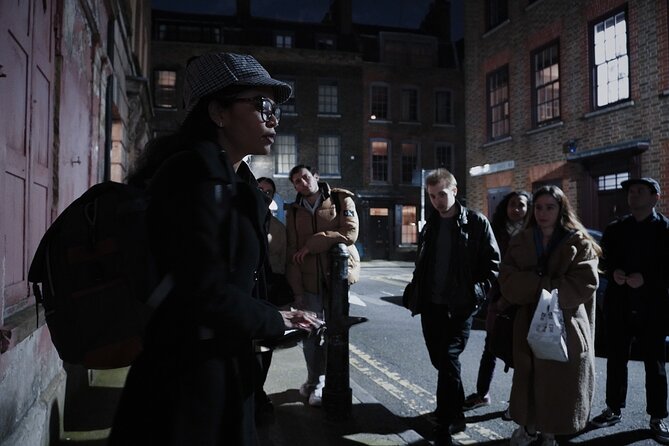
This is not simply a parade of murder sites. The better part of the experience is the setting around them. Whitechapel and Spitalfields still contain narrow streets, old lanes, historic buildings, and places where the shape of Victorian London can be felt.
The evening timing adds atmosphere, but it also suits the subject. You are looking at the same kind of dim passageways and confined streets that made East London difficult to police in the late 19th century. The darkness helps you picture the fear and uncertainty of the period without requiring theatrical effects.
The tour also gives the crimes a wider frame. Brick Lane was once part of a notorious slum, shaped by poverty, crime, and desperation. That context matters. If you only hear names, dates, and gruesome details, the story can become a cheap mystery game. Here, the streets help explain why the area was vulnerable and why so many people lived with little protection.
The mystery element remains central. You will hear about clues, possible suspects, and competing ideas, but the experience does not promise a final answer. That is a strength if you enjoy weighing evidence. It may frustrate you if you want a neat solution at the end.
More walking tours in London:
- Tour for Muggles The Ultimate Harry Potter Walking Tour in London
★ 5.0 · 4,684 reviews - London Jack The Ripper Guided Walking Tour
★ 5.0 · 3,131 reviews - Changing of the Guard Guided Walking Tour in London
★ 5.0 · 1,793 reviews
Brick Lane and the social world behind the crimes
The walk begins at St Marys Whitechapel Church Memorial and heads toward Brick Lane. The area is now associated with street art and curry houses, but the tour looks back to its earlier life as one of London’s poorest districts.
The useful point here is not just that the neighborhood was rough. You consider how crowded living conditions, insecure work, poverty, and desperation shaped daily life. That makes the later stops more meaningful, because you understand the setting as a working community rather than a stage built only for a murder story.
Brick Lane is also a good opening stop because it gives the guide room to explain the city around the case. You get social history before the most graphic material begins. I prefer that order. It gives you a better sense of the people who lived in the area and avoids treating the victims as mere pieces in a puzzle.
Expect the route to be outdoors throughout. Since the experience takes place at night, comfortable shoes and clothing suited to London weather will matter more than anything decorative. The tour is offered in English, so you should be comfortable following a spoken story while walking and standing.
Princelet Street and Annie Chapman’s story
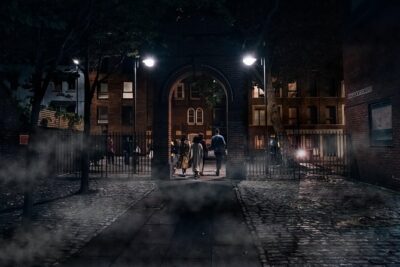
Princelet Street brings the group into a narrower, more atmospheric setting. Its cobbled surface and old buildings offer a glimpse of East London in the 1880s, at least in the physical character of the street.
Here, the guide connects the location to Jack the Ripper’s movements and to Annie Chapman. That personal connection gives the stop more weight than a general description of the neighborhood. You are asked to think about a particular woman’s life, not just an anonymous victim in a famous case.
This is one place where the tone of the guide matters. Sadie has been especially praised for telling the women’s stories with energy and a sense of respect. That approach is important. A good guide can keep the walk engaging without turning violence against women into a joke or a cheap scare.
Princelet Street is also a reminder that the physical setting can be suggestive without proving anything. A dark lane may feel ominous today, but atmosphere is not evidence. The best guides keep those two ideas separate, allowing the place to set the mood while the facts carry the argument.
Puma Court and the danger of narrow alleys
Puma Court is presented as one of the eeriest alleys in Spitalfields. The name and setting help create a strong visual pause in the walk, but the point is less about supernatural suspense than about vulnerability.
You stand in a confined passage and consider how exposed the victims were in dim, quiet corners. That simple change of scale can make the case feel more immediate. A broad modern street is easy to dismiss as ordinary. A tight alley encourages you to think about distance, visibility, escape, and the limits of police protection.
Still, this is a location where your imagination will do part of the work. The tour does not turn Puma Court into a museum exhibit, and no admission ticket is required at any stop. You are outside, listening to the guide’s account and looking at the surroundings as they are now.
If you prefer tours with indoor access, displays, or preserved crime-scene rooms, this may feel spare. If you like connecting a story to the streets themselves, it is a useful part of the route.
Other Ripper walks in London:
- London Jack the Ripper Guided Tour with Ripper-Vision
★ 4.5 · 4,840 reviews - Ultimate Jack the Ripper : Guided Tour of London
★ 5.0 · 1,495 reviews - The Original Jack the Ripper : Guided Tour
★ 5.0 · 1,264 reviews - London Jack The Ripper Small-Group Walking Tour
★ 5.0 · 1,013 reviews
The Ten Bells and the last known movements
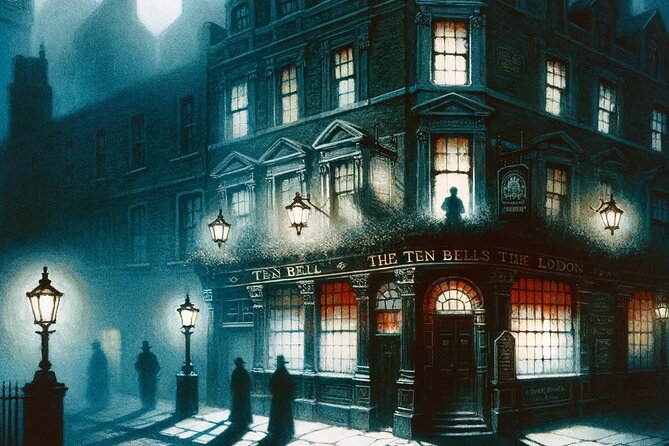
The Ten Bells is one of the most recognizable names on the walk. The historic pub is linked to the case, and the guide recounts how several victims were last seen alive there.
The group gathers outside, so the experience does not depend on sitting down inside or buying a drink. That keeps the visit focused and avoids turning the stop into a pub crawl. You hear the account, consider the connection to the women, and then move on.
This stop can be emotionally difficult because it brings the final hours of the victims into the story. The best presentation keeps the focus on people and circumstances rather than piling on gruesome detail. Again, Sadie’s reported emphasis on the women’s stories is the sort of approach I would want here.
The Ten Bells is also a place where legend and documented history can blend. Ask questions if your guide leaves room for them. Tyson has been praised for answering questions and keeping the group involved, while Lisa has been noted for helping people follow the history and orient themselves along the route.
Gunthorpe Street and Martha Tabram
Gunthorpe Street adds an important note of uncertainty. The site is connected to the killing of Martha Tabram, but she is not officially listed among the confirmed Ripper victims. Many people believe she may have been the first.
That distinction is exactly why this stop earns its place. You see how historians and investigators must separate known facts from theories. The walk is more interesting when it admits the limits of the evidence instead of presenting every connection as certain.
Martha Tabram’s case also broadens the story beyond the most famous names. It shows how the boundaries of the Ripper case have been argued over time. You are not simply following a fixed list. You are considering why one victim is included in some theories and left out of others.
For a visitor, this is a good point to resist the urge to solve everything too quickly. The tour’s title promises a murder mystery, but the real task is to understand why the mystery has survived. Missing evidence, disputed links, and public fascination all play a role.
Goulston Street and the disputed clue
Goulston Street is one of the most important evidence stops. After the double murder, investigators found a bloodied apron fragment and a chalk message. Those details led to fierce debate among police, historians, and later writers.
The guide can use this location to show how clues become powerful, even when their meaning is uncertain. Was the message connected to the killer? Was it written by someone else? What did the apron fragment prove, and what did it fail to prove? The location gives the questions a physical anchor.
This is likely to be one of the more satisfying stops for anyone who enjoys detective work. You get a clue with a clear place in the case, but you are not handed a tidy answer. That balance is better than a tour that declares one suspect guilty based on thin evidence.
The stop also shows how public fear can grow around small, ambiguous details. A fragment of fabric and a few words can become central to a century-old mystery. You will leave Goulston Street with more questions, which is the right result for an unsolved case.
St Botolph’s Aldgate and a different view of safety
St Botolph’s Aldgate changes the mood. The church stood at the edge of Whitechapel and offered shelter to many women during the Victorian era. It was a place of safety close to streets where danger was never far away.
That contrast is valuable. The walk is not only about pursuit, violence, and suspicion. It also points to the small systems of support available to vulnerable women. A church could offer help, but it could not erase the poverty and danger surrounding the area.
This stop gives the guide a chance to return to the wider social story. You see the victims as women living within a community, not simply as names attached to a criminal legend. I consider that one of the strongest reasons to choose a serious guided walk rather than a purely sensational attraction.
It also makes the route feel less repetitive. After several crime locations, St Botolph’s provides a pause and a different question: where could a woman go for safety, and how close was that refuge to danger?
Mitre Square brings the route to its darkest point
The tour ends at Mitre Square, where Catherine Eddowes was murdered. The site provides a powerful final stop because it brings together many of the themes raised earlier: poor lighting, vulnerable streets, uncertain evidence, and the public shock that followed the killings.
Ending here gives the walk a clear shape. You start with the neighborhood and its social conditions, move through individual locations and disputed links, and finish at one of the most notorious crime scenes in the case.
The ending is also a practical point you should plan around. You do not return to St Marys Whitechapel Church Memorial. Your final location is Mitre Square, London EC3A 5DE, so you need to orient yourself for the journey afterward. This is easy to overlook when booking a walking tour, especially if you have dinner, theater tickets, or a train to catch.
Guides, group size, and the quality of the storytelling
The maximum group size is 25 people. That is not a private walk, but it is still a manageable number for a guide-led city tour. The experience depends heavily on the person holding the group’s attention, and the named guides have different strengths.
Tyson is praised for keeping the group involved, remembering people’s names, and answering questions. That personal touch matters during a long walk because it prevents the experience from becoming a lecture delivered over your head.
Sadie’s strength is her spirited and empowering treatment of the women’s stories. Jess brings humor and patience while discussing each scene. Lisa has been noted for helping with both the historical material and practical orientation.
One practical concern is volume. At least one person found it hard to hear everything when the guide’s voice did not carry well. In a group of up to 25, stay near the guide when possible and speak up early if you cannot hear. That small choice can make the difference between following the clues and missing key links.
Is $22.99 good value for two and a half hours?
At $22.99 per person, the price is reasonable for a 2.5-hour guided walk in central London. You are paying for a researched narrative, a route through several connected areas, and a guide who can explain the case as you move between locations.
There are no admission tickets at the stops, so the value comes from interpretation rather than entry to an attraction. That suits you if you want context and storytelling. It is less appealing if you expect displays, indoor exhibits, or special access to historic interiors.
The group discount may help if you are booking for several people. A private upgrade is available if you want more room for questions, a more personal pace, or a guide focused only on your party. The standard group option should suit most people who want the shared energy and lower price.
The tour is booked an average of 36 days ahead, which suggests you should not leave it until the last minute if the time matters to you. Confirmation arrives when you book, and free cancellation applies up to 24 hours before the start time. Cancel inside that window and the payment is not refunded.
Who should book this night walk?
I would choose this experience if you enjoy urban history, unresolved mysteries, and walking tours that connect famous events to ordinary streets. It suits adults and older children who can handle serious subject matter and remain attentive for 2.5 hours.
You will get the most from it if you like asking how evidence works. The walk is not only about identifying Jack the Ripper. It asks you to weigh confirmed facts, disputed claims, social conditions, and the role of later legend.
I would think twice if you dislike nighttime walking, have trouble hearing guides in a group, or need to finish where you began. The route is outdoors, and the final stop is Mitre Square rather than the departure point.
Should you book it?
Book this tour if you want a focused introduction to the Jack the Ripper case with real Whitechapel locations, a clear route, and guides who can add humor and human detail. The 4.9 rating from 171 ratings and 97 percent recommendation figure support its strong reputation, but the value still depends on getting a guide whose voice and style suit you.
The strongest reason to go is the balance between mystery and social history. You get The Ten Bells, Goulston Street, and Mitre Square, but you also get Brick Lane, St Botolph’s Aldgate, and the stories of women who lived in a difficult part of London. At $22.99, that makes this a solid choice for a first look at the case.
FAQ
How long does the Jack the Ripper night walk last?
The tour lasts approximately 2 hours and 30 minutes.
How much does the tour cost?
The listed price is $22.99 per person.
Where does the tour begin?
The meeting point is St Marys Whitechapel Church Memorial, on Unnamed Road, London E1 1FE, United Kingdom.
Where does the tour end?
The final stop is Mitre Square, London EC3A 5DE.
Does the tour return to its starting point?
No. The walk ends at Mitre Square, so you need to plan your onward route from there.
What places are visited?
The route includes Brick Lane, Princelet Street, Puma Court, The Ten Bells, Gunthorpe Street, Goulston Street, St Botolph’s Aldgate, and Mitre Square.
Is the tour offered in English?
Yes. The experience is offered in English.
How many people can join the group?
The tour can have a maximum of 25 people.
Is a private tour available?
Yes. You can upgrade to a private tour for a more personal experience.
What is the cancellation policy?
You can cancel at least 24 hours before the start time for a full refund. Cancellations or changes made less than 24 hours before the experience are not accepted for a refund.
Just added in London
- London, Windsor Castle, Hampton Court Palace with Free Snack Pack★ 4.0 · 102 reviews
- Central London to Southampton Cruise Port Private transfers★ 4.5 · 128 reviews
- London Christmas Lights Tour by Vintage Double-Decker Bus★ 4.0 · 135 reviews
- London Christmas Lights Guided Tour With Christmas Music★ 5.0 · 118 reviews
- Emirates Stadium and Arsenal Museum Entrance Ticket Including Audio Guide★ 4.5 · 113 reviews
- Hampton Court Palace Private Tour – Secrets of Henry VIII★ 5.0 · 127 reviews
- Heathrow To Southampton Cruise Port Transfers★ 4.5 · 110 reviews
- Private London Departure Transfer – Hotel / Accommodation to Cruise Port★ 4.5 · 77 reviews
Jack the Ripper Tours, compared.
London Jack the Ripper Guided Tour with Ripper-Vision
Read our review →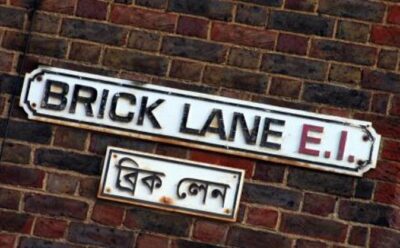
Ultimate Jack the Ripper : Guided Tour of London
Read our review →

London Jack The Ripper Small-Group Walking Tour
Read our review →

The Original Jack the Ripper Coach Tour of Haunted London
Read our review →
Jack the Ripper Tour with ‘Ripper-Vision’ in London- Afternoon
Read our review →Browse the lists this tour appears in