
Reviewed · WALKING TOURS
Slavery and City of London Walking Tour
London’s slavery story is not confined to museums or distant plantations. This walk puts it beneath your feet, beside the Roman wall, outside the Bank of England, and near the coffee house tied to the sugar trade. Sam’s Walks connects familiar sights with the people and institutions that helped build Britain’s wealth.
I like two things in particular: the tour reaches lesser-seen corners of the City, and Sam uses architecture, oral history, and images to make difficult subjects easier to grasp. The main consideration is the route’s uneven timing: it is advertised at about 90 minutes, yet some tours have run closer to two hours, and the end point needs checking because the details mention both Aldgate and St Paul’s.
Key points to know before booking
- Roman London begins the story: See part of the wall that helped define Londinium and hear about Roman enslavement of Britons.
- The route links trade and power: The East India Company, Jamaica Coffee House, Royal Africa Company, and Bank of England all enter the discussion.
- Abolition is part of the walk: Granville Sharp and John Newton provide a useful counterpoint to the institutions tied to slavery.
- Sam leads the experience: He is an author of books about the area and uses images and oral history alongside the streets themselves.
- It is a small-group city walk: Up to 35 people can join, so expect a public group rather than a private tour.
- The price is modest: At $27.43, you are paying mainly for interpretation and context, not paid admissions.
Why this City of London walk matters

The City of London can feel like a maze of banks, churches, office blocks, and narrow lanes. It is easy to admire the grand buildings without asking how the money behind them was made. This walk gives you that missing question.
The subject is British involvement in slavery and the transatlantic slave trade, but the route begins earlier. You first hear about Roman enslavement of Britons, then move into the commercial world of the 17th and 18th centuries, when London companies and merchants profited from colonial trade and plantation labor.
That broad time span is one of the tour’s strongest features. You are not given a single, tidy story. Instead, the walk shows how enslavement changed form across centuries and how the City’s legal, financial, and commercial institutions were tied to those systems.
I also like that the tour includes abolitionists rather than presenting London only as a place of exploitation. Granville Sharp and John Newton help show the arguments, campaigns, and personal changes that challenged the slave trade. The result should feel serious, but not simply gloomy.
More city tours in London:
- Westminster to Greenwich Sightseeing Thames Cruise in London
★ 4.5 · 2,969 reviews - London Sightseeing Tour: Guard Change with Tower of London Option
★ 4.5 · 2,672 reviews - Hop-On Hop-Off Sightseeing River Cruise on the Thames
★ 4.0 · 1,256 reviews
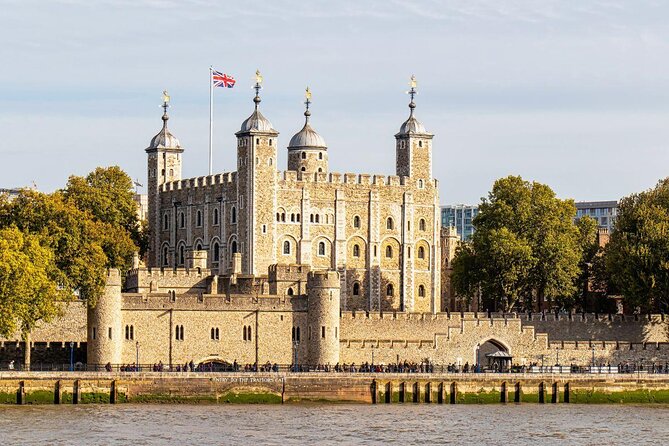
Starting at the Tower of London
The walk begins at Tower Hill, close to the Tower of London and Trinity Square, at noon. The nearby Ordnance Office provides the first important connection. Granville Sharp worked there and became one of the leading British opponents of slavery in the 18th century.
This is a useful opening because it places an individual beside the machinery of government and military power. Sharp was not an abstract name in a textbook. He worked in this part of London, and his campaign formed part of the wider movement that eventually helped end Britain’s involvement in the transatlantic slave trade.
You will not be touring the Tower itself. The attraction here is the surrounding street and the story attached to it. If you want a full visit to the Tower of London, plan that separately. This walk uses the area as a starting point rather than providing admission or an interior visit.
The Roman wall and the first chapter of the story
One of the earliest stops is a section of the Roman wall of Londinium. The wall helped define the ancient city nearly 2,000 years ago, and visible remains survive beneath and beside later buildings.
The guide uses this stop to make an important point: enslavement in Britain did not begin with the Atlantic trade. The Romans enslaved Britons, while Roman writers also complained about the character of the people they conquered. That detail gives the story a human, slightly wry edge, but the larger point is serious. Britain’s experience with slavery reaches back to its Roman origins.
This part also introduces the City of London as a distinct legal area. The City has its own historic institutions, separate police force, and mayor. Those details help explain why the modern streets can feel different from the rest of central London, even when the boundary is easy to miss.
I would pay close attention here. The wall is not a grand, complete monument. It is a fragment woven into a modern urban setting. Sam’s strength is meant to be the explanation of what you are seeing, not the scale of the ruins themselves.
East India House and the machinery of empire
The route continues to the former site of East India House on Leadenhall Street. This was the headquarters of the East India Company, one of the most powerful commercial organizations in British history.
The company relied on enslaved labor and trafficked enslaved people from both West and East Africa. Its story shows that slavery was not linked only to plantation owners or ships crossing the Atlantic. Large companies, investors, officials, and commercial networks also helped make the system work.
There is no surviving East India House to walk through, which is precisely why a guided route helps. You are standing in an ordinary modern part of the City, yet the site once housed an organization with enormous reach. Without interpretation, you could pass it without knowing what happened there.
For me, this is one of the tour’s most useful lessons. It shifts the focus from distant colonies to the offices where decisions were made, money was managed, and trade was organized.
More walking tours in London:
- Tour for Muggles The Ultimate Harry Potter Walking Tour in London
★ 5.0 · 4,684 reviews - London Jack The Ripper Guided Walking Tour
★ 5.0 · 3,131 reviews - Changing of the Guard Guided Walking Tour in London
★ 5.0 · 1,793 reviews - The Great British Rock and Roll Walking Tour
★ 5.0 · 1,371 reviews
The Gilt of Cain at Fenchurch Street
At Fenchurch Street, the walk pauses near Fen Gardens and the Gilt of Cain sculpture. The sculpture commemorates the abolition of the transatlantic slave trade.
This stop gives the route a physical marker of remembrance. It is not only about identifying buildings linked to commerce. It also asks how London chooses to remember abolition and the people affected by the trade.
The sculpture is a worthwhile pause because it creates space for reflection after the East India Company discussion. You move from a company associated with exploitation to a public work connected with ending the trade. That contrast helps keep the walk from becoming a simple catalogue of wrongdoing.
Allow about ten minutes here. The stop is short, but it adds visual meaning to the discussion. If you prefer tours that keep moving constantly, this reflective pause may feel slower. I think it earns its place.
Jamaica Wine House and the coffee trade
The Jamaica Wine House marks the site of London’s first coffee house, known as the Jamaica Coffee House. It became a hub for the sugar trade and for business connected with the slave plantations of the West Indies.
This is a particularly effective stop because coffee houses can sound harmless today. In London’s commercial life, however, they were places where information, contracts, news, and business relationships circulated. The Jamaica Coffee House helps you see how plantation products entered the daily business world of the City.
The present-day building is not the original coffee house, so again, you are reading a place through its associations rather than entering a preserved historic room. That can be a limitation if you want a museum-style experience with original interiors. The benefit is that the walk shows how easily major stories disappear beneath ordinary streets.
The stop also sits close to the next discussion, which concerns abolitionist John Newton. That physical proximity gives the route a striking contrast between trade linked to slavery and the religious figure associated with opposition to it.
St Mary Woolnoth and John Newton

At St Mary Woolnoth, you hear about John Newton, who served as rector of the church. Newton is often remembered as an abolitionist, but his life also connected him to the slave trade before his later opposition.
The church itself is one of the City’s most recognizable landmarks, and its position near Bank makes it easy to combine with other sightseeing. The tour does not list an interior visit, so expect to discuss the church from the outside rather than take a formal church tour.
I like this stop because it resists simple labels. A person can be shaped by a system, participate in it, and later oppose it. That kind of moral change is more useful than a neat division between heroes and villains.
The setting also helps you understand the City as a compact place. A church, a financial district, a coffee house site, and major commercial offices all sit within a short walking distance. The route turns that compactness into a teaching tool.
The Bank of England and institutional responsibility
The Bank of England Museum is another major stop, scheduled for about 15 minutes. The Bank has apologized for the involvement of some former directors and governors in the slave trade and has promised to remove statues and paintings of them from public display in its Threadneedle Street building.
This part of the walk brings the subject into the world of finance and public institutions. You are not simply hearing about merchants who traded goods. You are considering how people in positions of authority and influence participated in, benefited from, or later confronted slavery.
The museum is listed as a free stop, but the tour does not promise a full museum visit. Treat it as an exterior discussion unless Sam tells you otherwise. If you want to explore the museum itself, you may need separate time.
Fifteen minutes is enough to understand the main point, but it is not enough for a full financial history of the Bank. The tour is best for connections. It shows you why the institution matters to the slavery story, then keeps the route moving.
The Royal Africa Company and City power
Another stop focuses on a building that represents London’s involvement in the transatlantic slave trade. The sheriffs, mayors, and aldermen of the City met there as shareholders of the Royal Africa Company.
This is a powerful reminder that civic office and commercial investment were not always separate worlds. People who held public positions in the City could also have financial interests in a company involved in the slave trade.
The precise building details matter less than the pattern they reveal. The tour keeps returning to the same question: who had power, who gained money, and who was forced to bear the cost?
This stop should appeal to you if you enjoy urban history that looks beyond royal palaces and famous monuments. It gives political and financial meaning to buildings you might otherwise see only as handsome City architecture.
Finishing near St Paul’s and Aldgate
St Paul’s Cathedral is listed as the final landmark, with the walk described as finishing near St Paul’s Underground station on the Central line. The meeting information separately gives Aldgate Underground station as the end point.
That inconsistency is worth checking before you set your day around the tour. Aldgate is east of the main City route, while St Paul’s is farther west, so the difference affects your next move. The supplied details identify Aldgate as the formal end point, but the St Paul’s reference suggests the cathedral is the closing landmark. Confirm the precise finish with Sam’s Walks when booking.
Either way, St Paul’s is a strong place to end a discussion about power, public memory, and national identity. You can admire the cathedral while also thinking about the wider economic system that helped shape London.
The walk does not include admission to St Paul’s. If you want to go inside, set aside another visit and check opening arrangements separately.
What the price gives you
At $27.43 per person, this is a fair price for a 90-minute guided walk through central London. You are not paying for entry to a major attraction. You are paying for someone to connect scattered sites that would otherwise be hard to interpret.
The value improves if you are already planning to see the Tower area, Bank, St Mary Woolnoth, or St Paul’s. The tour adds context to places you may already have on your list, and it introduces streets you might pass without noticing.
The group can include up to 35 people. That is not a private or highly personal format, though it is still a manageable size for an outdoor walk. Sam’s use of images and oral history should help keep the material clear, but your position in the group may affect how easily you hear and see everything.
The walk is mobile-ticket based, and confirmation is provided at booking. It is near public transportation, and most people can take part. Wear comfortable shoes, since even a short City walk involves standing and moving between stops.
Who will enjoy this most
I would recommend this tour if you want London history that goes beyond kings, churches, and famous views. It suits anyone interested in slavery, abolition, empire, finance, architecture, or the way public memory changes.
It is also a good fit if you have visited London before. The route is designed to make familiar places look different. You may have walked past the Jamaica Wine House, Bank of England, or St Mary Woolnoth without knowing their connection to the story.
Families with older children may find the walk useful, but the topic is serious. Younger children may not get much from the financial and political detail. The tour is also a strong choice for students and history-minded visitors who want a clear introduction before visiting museums or reading further.
You may want to skip it if you only have time for classic sightseeing and prefer a light, entertainment-first walk. This is a discussion-led experience. Its appeal comes from context, not from entering grand buildings or seeing a long list of attractions.
Timing, cancellation, and practical planning
The scheduled start is 12:00 p.m. at Tower Hill, near Trinity Square. The advertised duration is approximately one hour and 30 minutes, though the route can take closer to two hours depending on the discussion.
Book with enough space afterward for a meal, museum visit, or onward sightseeing. The tour has a minimum number of participants and needs good weather. If poor weather or low numbers cause cancellation, you are offered another date or experience, or a full refund.
You can cancel for a full refund up to 24 hours before the start time. Changes or cancellations inside that window are not accepted for a refund. Since this is an outdoor walk, check the forecast and wear suitable clothing.
Should you book the Slavery and City of London Walking Tour?
Book it if you want to understand how London’s streets, companies, churches, and financial institutions connect to slavery and abolition. At $27.43, it offers strong value for a focused lesson led by Sam, whose approach combines local architecture with oral history and images.
The main cautions are the group size, the outdoor format, and the conflicting information about the final stop. Confirm whether you finish at Aldgate or near St Paul’s, and allow more than the advertised 90 minutes if you want a relaxed schedule.
I would choose this walk over a standard sightseeing circuit if you have already seen the main monuments or want a more honest account of how Britain’s wealth was built. It will not replace a museum visit, but it can change the way you read the City of London afterward.
FAQ
Where does the tour start?
The tour starts at 12:00 p.m. at Tower Hill, near Trinity Square, London EC3N 4TH.
Where does the tour finish?
The end details identify Aldgate Underground station on Aldgate High Street as the finish. The route also lists St Paul’s Cathedral and refers to St Paul’s Underground station, so confirm the exact final point before booking.
How long does the walk last?
The advertised duration is approximately one hour and 30 minutes. The route can take closer to two hours, so leave extra time afterward.
How much does the tour cost?
The listed price is $27.43 per person.
What landmarks are included?
The route includes the Roman wall of Londinium, the former site of East India House, the Gilt of Cain sculpture, Jamaica Wine House, St Mary Woolnoth, the Bank of England, St Paul’s Cathedral, and sites connected with the Royal Africa Company.
Who leads the tour?
The walk is provided by Sam’s Walks and led by Sam. He is described as an author of several books about the area and uses architectural details, oral history, and images during the walk.
How large is the group?
The maximum group size is 35 people.
Can I cancel for a refund?
Yes. You can cancel at least 24 hours before the local start time for a full refund. Cancellations or changes made less than 24 hours before the start are not refunded.
Just added in London
- The Beatles and a Secret pub★ 4.5 · 36 reviews
- The Beatles & Liverpool Magical Mystery Tour from London★ 4.5 · 80 reviews
- Airport Coach Service from Heathrow to Oxford★ 3.5 · 67 reviews
- The Beatles Magical History Black Taxi Tour London★ 5.0 · 51 reviews
- The Beatles London walking tour. From Abbey Road to the Roof Top★ 5.0 · 61 reviews
- Private The Beatles Taxi Tour in London★ 5.0 · 12 reviews
- The Beatles London Walk★ 4.5 · 120 reviews
- Dinner and Jazz Cruise on the River Thames★ 4.0 · 140 reviews
Walking Tours, compared.
Oxford University Walking Tour With University Alumni Guide
Read our review →
Tour for Muggles The Ultimate Harry Potter Walking Tour in London
Read our review →
Cambridge University Walking Tour by Alumni™ Kings College Option
Read our review →
Blackbeard to Banksy – The Ultimate Walking Tour of Bristol
Read our review →
Air Raid Shelter + St. Nicholas Market Walking Tour
Read our review →
Walking Tour of Bath with Blue Badge Tourist Guide
Read our review →
Changing of the Guard Guided Walking Tour in London
Read our review →Browse the lists this tour appears in