
Reviewed · WALKING TOURS
Burnings, Butchery & Black Death: A Walking Tour of London’s Bloody Past
London’s darker story is written into ordinary streets. On this two-hour walk, you’ll pass a former plague pit, a thousand-year-old meat market, a medieval hospital, a vanished river that became an open sewer, and the place where the Great Fire finally stopped. The best part is how much history is packed into a small area.
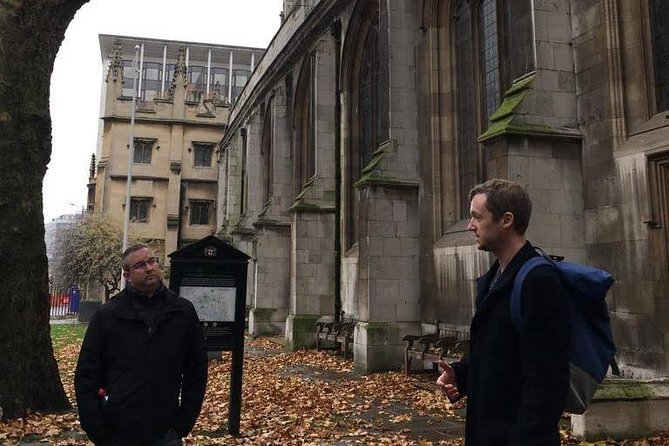
I like the small groups, capped at 15, because guide Tom can keep the talk lively and answer questions. I also like that the route avoids the usual Jack the Ripper script and instead covers Wallace, the Blitz, ghost scares, medieval religious orders, and the old City of London. The main consideration is that this is an outdoor walking tour, so poor weather can affect the experience.
Key points before you book
- A thousand years in two hours: The walk moves from medieval plague and religious orders to Victorian sanitation and wartime London.
- Small groups matter: A maximum of 15 people makes it easier to hear Tom and ask questions.
- The route finds overlooked places: Cloth Fair, St. John’s Gate, the Golden Boy of Pye Corner, and the River Fleet site can be easy to miss alone.
- It includes one paid interior: Admission to the Church of St. Bartholomew the Great is included.
- The finish is near Farringdon: The tour ends on Ely Place, around the corner from Farringdon Station.
- Value is strong at $27.73: You get two hours of guiding through several historic sites, though food, drinks, and transport are not included.
Why this route feels different from standard London walks
London has no shortage of dark-history tours. Many focus on famous murder cases, especially Jack the Ripper. This route takes a broader view. It looks at the conditions that made London dangerous: disease, fire, overcrowding, public executions, poor sanitation, war, and the rough business of feeding a growing city.
That wider focus gives the walk more substance. You are not simply hearing a string of grisly tales. You are seeing how the city changed and how its older buildings still shape modern streets.
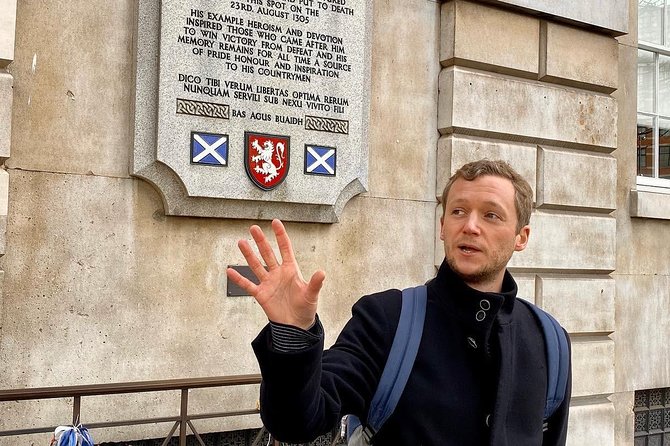
Guide Tom is a major part of the experience. He is described as clear, humorous, approachable, and able to connect old events with modern London. He also adds passing details about filming locations, the Blitz, St. John Ambulance, local dining, and nearby pubs. That sort of commentary helps the route feel like a walk through a living city rather than a museum lecture.
The small-group limit is useful here. With no more than 15 people, you have a better chance of hearing the story beside a busy road or narrow alley. It also gives you room to ask about a building or street that catches your eye.
More walking tours in London:
- Tour for Muggles The Ultimate Harry Potter Walking Tour in London
★ 5.0 · 4,684 reviews - London Jack The Ripper Guided Walking Tour
★ 5.0 · 3,131 reviews - Changing of the Guard Guided Walking Tour in London
★ 5.0 · 1,793 reviews
Starting at Aldersgate and the Charterhouse plague pit
The meeting point is at Underground Ltd on Aldersgate Street, in the Barbican area. From there, the walk begins with the Charterhouse, a fourteenth-century monastery connected with a plague pit.
This is an effective opening because it puts London’s worst health crises right under your feet. The Charterhouse is not just an old building with a solemn past. It points to the scale of medieval disease and to the religious life that once shaped this part of the city.
You should expect about 10 minutes at each listed stop. That keeps the pace moving, but it also means the guide must select the best stories rather than explain every detail. If you enjoy long visits inside historic buildings, this format may feel brisk. If you want a sharp overview with plenty of ground covered, the timing works well.
The Charterhouse also sets the tone for the rest of the walk. You will be looking at familiar London streets through the lens of death, disaster, and survival, without reducing the city to a collection of ghost stories.
Smithfield Market and the hard business of meat
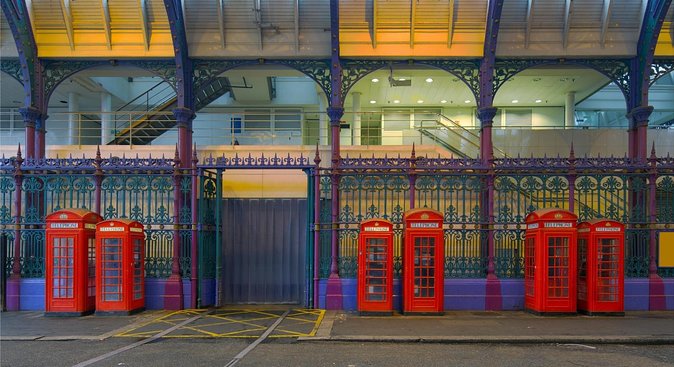
Next comes Smithfield Market, a meat market with roughly a thousand years of history. This stop gives the tour a practical edge. London’s past was not only kings, churches, and grand ceremonies. It also depended on slaughter, food supply, trade, and the difficult work of keeping a huge city fed.
Smithfield has a direct connection to the tour’s title, but the value of the stop is broader than its grisly associations. You can see how commerce and public life met in this part of London. The market helped shape the district, while its business brought noise, smells, animals, workers, and regulation into the city.
This is one of the places where Tom’s local focus should help. The route gathers several stories in a tight area, so a guide can point out details that would otherwise pass without notice. The walk is not simply a procession from famous landmark to famous landmark. It is a lesson in reading the street around you.
St. John’s Gate and Cloth Fair
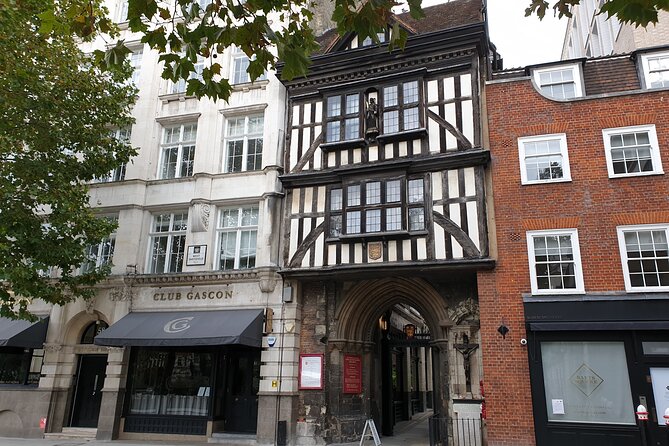
St. John’s Gate was once home to the medieval Knights Hospitallers. The building offers a change of mood after Smithfield. Here, the story turns toward religious and military orders, medieval institutions, and the people who lived and worked behind old city walls.
The stop is short, but its position on the route matters. London’s history is layered. A market, a religious headquarters, a hospital, and a narrow alley can all sit close together while belonging to very different eras.
Cloth Fair follows with a quieter setting and a noisy past. The name recalls the importance of cloth and trade, while the narrow street shows how little space people once had in the crowded medieval city. This is the sort of stop you might walk through without noticing if you were heading toward a better-known attraction.
The tour’s strongest moments are likely to come in places such as this. The street itself may not demand a long visit, but the story gives it weight. I like that approach because it makes you more alert for small signs of old London elsewhere.
Same base, a different kind of day:
- Stonehenge, Windsor Castle, and Bath from London
★ 4.5 · 18,662 reviews - London Big Bus Hop-On Hop-Off Tour with Optional River Cruise
★ 3.5 · 10,803 reviews - London Small Group Tour of Historical Pubs
★ 5.0 · 10,422 reviews - Stonehenge, Windsor Castle and Bath with Pub Lunch in Lacock
★ 4.5 · 7,402 reviews
William Wallace, films, and the old church
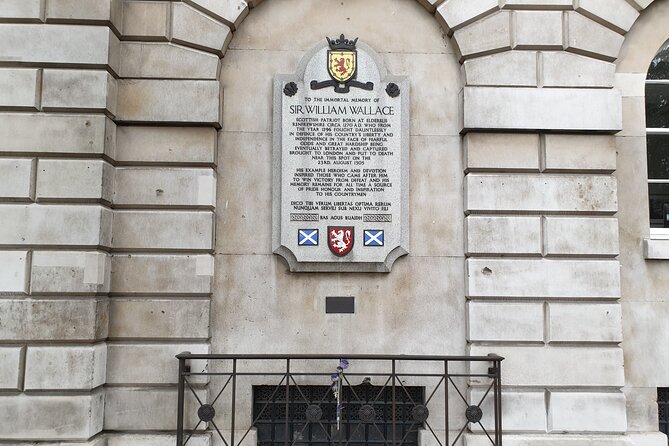
The William Wallace Memorial marks the Scottish figure also known as Braveheart. It is an unexpected stop in this part of London, and it adds a political and national dimension to the walk.
The memorial is also a reminder that London’s story is connected to events far beyond the immediate street. A short stop here can open questions about medieval conflict, public memory, and the way later generations choose which figures to commemorate.
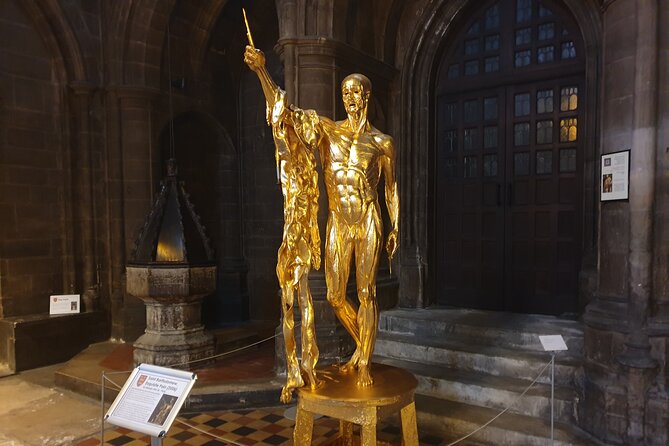
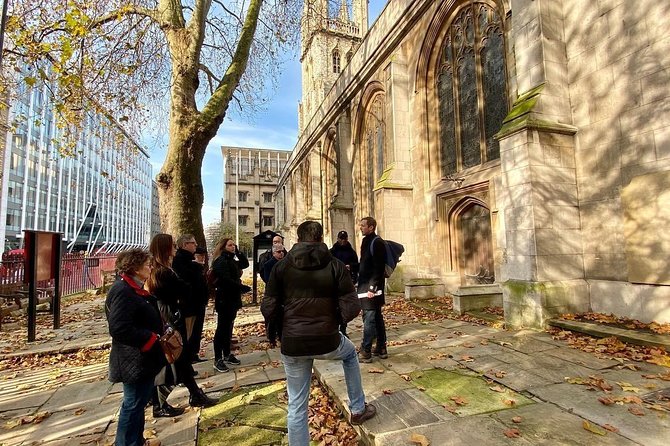
The route then reaches the Church of St. Bartholomew the Great, described as London’s oldest surviving parish church. Admission is included, which makes this the main interior visit on the walk.
Inside, the atmosphere should provide a welcome change from the pavement. The church brings the medieval past into clearer focus, and its survival gives you a rare chance to stand within a working historic setting rather than only viewing an exterior.
The schedule allows about 10 minutes here. That is enough for an introduction and a look around, but not a long independent visit. If this church is a priority for you, you may want to return on your own after the tour and spend more time there. The tour gives you context first, which can make a later visit more rewarding.
Tom also brings in film-location details along the route. These are not the main subject, but they add a light modern touch to the older stories. You may enjoy the contrast between the church’s medieval setting and its place in contemporary popular culture.
The Golden Boy and London’s great fire
The Golden Boy of Pye Corner marks the spot where the Great Fire of 1666 finally stopped. It is a small marker with a large story. The fire changed London’s buildings, streets, and ideas about urban safety, and this stop gives you a clear physical point for that event.
The location also connects with eighteenth-century ghost hysteria. That detail keeps the tour from treating history as a neat sequence of major dates. London’s fears changed over time, but fear itself remained a constant part of city life.
This is a good example of the tour’s mix. You get a major disaster, a small memorial, and a strange chapter in public belief within a few minutes. The stories are dark, but the guide’s humor helps prevent the walk from becoming relentlessly grim.
You should not expect a large monument or a long visit. The Golden Boy is best understood as a signpost in the city. The guide’s explanation is what turns it into a meaningful stop.
Holborn Viaduct and the lost River Fleet
At Holborn Viaduct, the route reaches the site of the River Fleet, once Victorian London’s largest open-air sewer. This is one of the strongest stops for understanding how London’s infrastructure changed.
The Fleet began as a river, but urban growth transformed it into a polluted channel and then into a buried waterway. That story explains why London’s streets and bridges can feel disconnected from the natural features that shaped them.
You may find this part especially useful if you enjoy urban history. It shows that the city’s darker past was not only about violence. Disease and poor sanitation often came from basic systems failing to keep pace with population growth.
The viaduct itself is part of the modern city, so the contrast is sharp. Cars, shops, offices, and commuters move across an area that once carried open sewage. The route asks you to picture what is no longer visible, and that is one of the pleasures of a well-led city walk.
Ye Olde Mitre and the end at Ely Place
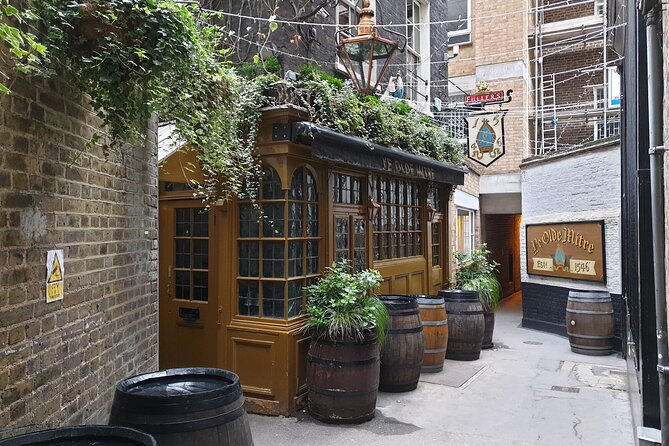
The walk finishes near Ye Olde Mitre, a pub tucked down an alleyway, before ending on Ely Place. The pub is not listed as an included meal or admission, so plan to pay separately if you stop for food or a drink.
Still, it makes practical sense as a final landmark. A historic pub gives you a chance to continue the atmosphere after the formal tour, and the area is well placed for lunch or a drink. Specific food suggestions associated with the pub include cheese toasties and pork pies, but these are additional purchases rather than part of the tour price.
The official end is on Ely Place, around the corner from Farringdon Station. That makes the finish convenient for continuing around central London or catching public transport. It also means you are not left at an isolated edge of the city.
I like tours that finish with a useful transport option instead of forcing you to retrace the route. Here, the end point works well for combining this walk with another London activity.
Is $27.73 good value for two hours?
At $27.73 per person, the tour is reasonably priced for a small-group walk with a named guide and an included church visit. You are paying mainly for the storytelling and local knowledge, not for a long list of paid admissions.
The value comes from the route. In two hours, you see 10 significant places, including several that are easy to overlook. The Charterhouse, Cloth Fair, the Golden Boy, the River Fleet site, and the old lanes around Ely Place would be hard to connect into one coherent walk without preparation.
There are limits. Most stops last about 10 minutes, so the experience is an overview rather than a slow historical study. You also need to budget separately for food, drinks, and anything else you choose to visit after the walk.
For me, the price works best if you want orientation and stories early in your London stay. You can use the route to decide which places deserve a longer return visit.
Practical details and who should book
The tour lasts approximately two hours and is offered in English. It uses a mobile ticket, and confirmation is provided when you book. The route is near public transport, beginning on Aldersgate Street and ending near Farringdon Station.
Most people can take part, and service animals are allowed. You should still expect a city walking tour rather than a seated experience, with time spent outdoors and short stops along the way.
The tour requires good weather. If poor weather causes cancellation, you will be offered another date or a full refund. You can cancel for a full refund up to 24 hours before the start time, but changes or cancellations inside that window are not accepted.
I would recommend this for first-time visitors who want a different introduction to London, repeat visitors who have already seen the headline sights, and anyone interested in disease, crime, public health, religious history, and old city infrastructure. It also suits people who enjoy finding unusual corners of a familiar city.
It may not suit you if you want a long visit inside every church, dislike walking outdoors, or prefer a tour focused on one narrow subject. The title promises blood and darkness, but the route is really a broad history walk with grim moments, not a nonstop horror show.
Should you book Burnings, Butchery & Black Death?
Book it if you want London’s past explained through streets, alleys, markets, churches, memorials, and old public works. The strongest reasons are the compact route, the small group, Tom’s engaging delivery, and the decision to move beyond the familiar Jack the Ripper material.
Skip it if you want a major attraction with extended admission time or a fully indoor experience. For $27.73, though, this is a useful and entertaining way to see the City of London differently, especially near the start of your trip.
FAQ
How long does the walking tour last?
The tour lasts approximately two hours.
How much does the tour cost?
The listed price is $27.73 per person.
Where does the tour start?
It starts at Underground Ltd on Aldersgate Street, Barbican, London EC1A 4JA, UK.
Where does the tour end?
It ends on Ely Place, around the corner from Farringdon Station.
How many people can join the tour?
The maximum group size is 15 people.
What language is the tour offered in?
The tour is offered in English.
Is admission to any attraction included?
Admission to the Church of St. Bartholomew the Great is included. The other listed stops have no admission charge.
Is the tour suitable for most people?
Most people can participate, and service animals are allowed.
What happens if the weather is poor?
The experience requires good weather. If it is canceled because of poor weather, you will be offered a different date or a full refund.
Just added in London
- Transfer London to Southampton Cruise Terminal (extra luggage)★ 4.5 · 81 reviews
- London, Windsor Castle, Hampton Court Palace with Free Snack Pack★ 4.0 · 102 reviews
- Central London to Southampton Cruise Port Private transfers★ 4.5 · 128 reviews
- London Christmas Lights Tour by Vintage Double-Decker Bus★ 4.0 · 135 reviews
- London Christmas Lights Guided Tour With Christmas Music★ 5.0 · 118 reviews
- Emirates Stadium and Arsenal Museum Entrance Ticket Including Audio Guide★ 4.5 · 113 reviews
- Hampton Court Palace Private Tour – Secrets of Henry VIII★ 5.0 · 127 reviews
- Heathrow To Southampton Cruise Port Transfers★ 4.5 · 110 reviews
Walking Tours, compared.
Oxford University Walking Tour With University Alumni Guide
Read our review →
Tour for Muggles The Ultimate Harry Potter Walking Tour in London
Read our review →
Cambridge University Walking Tour by Alumni™ Kings College Option
Read our review →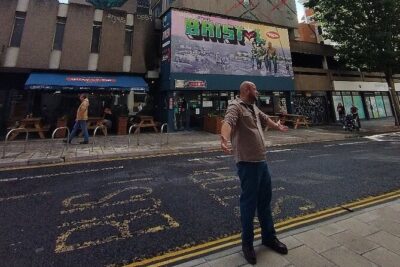
Blackbeard to Banksy – The Ultimate Walking Tour of Bristol
Read our review →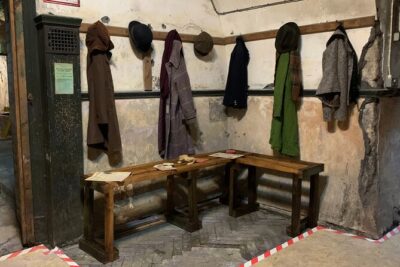
Air Raid Shelter + St. Nicholas Market Walking Tour
Read our review →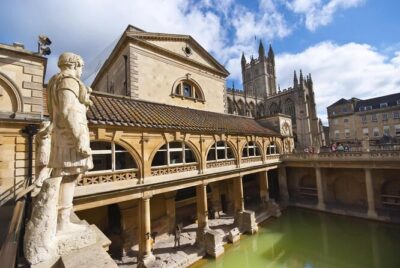
Walking Tour of Bath with Blue Badge Tourist Guide
Read our review →
Changing of the Guard Guided Walking Tour in London
Read our review →Browse the lists this tour appears in